
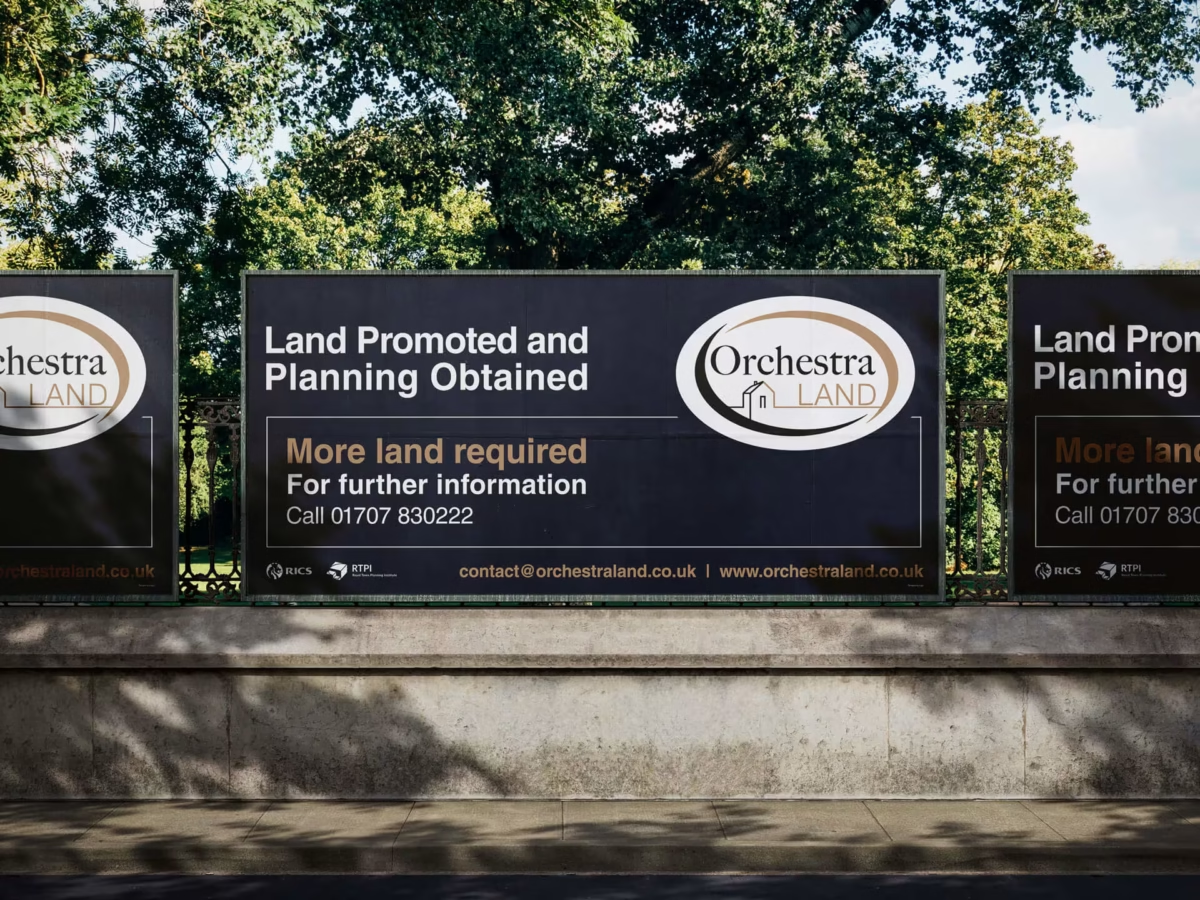
Your perimeter hoarding is the largest piece of advertising you own, and most developers treat it as an afterthought. Every student walking past a PBSA development, every commuter driving past a residential scheme, every investor visiting the area is seeing your hoarding before they see anything else. That is free, constant exposure to the local market. It should be designed like it matters.
Once someone is inside the building, the wayfinding takes over. Unclear signage, missing floor identifiers, and inconsistent numbering create a bad first impression for residents, confuse delivery drivers, and fail building control requirements. Good wayfinding is invisible when it works and painful when it does not.
We handle both. Design, procurement, material specification, print management, and installation coordination. One point of contact for the full chain.
15 minutes on the phone. You tell us what the development needs and when it needs to be ready. We ask for architectural plans or a visit.
We produce concepts, get sign-off, then quantity-survey every floor plan to determine what is needed and where it goes. We source printers and signwriters, balance quality against budget, and handle sampling.
We coordinate installation with your programme. Residents, staff, and visitors can navigate the building without guessing, and your hoarding is working for you from day one.
Burj Digbeth is a 160-apartment development in central Birmingham, delivered in three phases. We designed internal wayfinding across seven floors and every core, specified Perspex-fronted signs with aluminium stand-offs for durability, and managed procurement through commercial print houses. Core 1 was installed on schedule for the first residents in late 2024, with cores 2 and 3 following as decorating finished. The system meets building control requirements for emergency visibility, letter height, and contrast ratios.
15 minutes on the phone. Tell us what your development needs and we will tell you what it takes to get it looking right before handover.